Life or Death Emergency
“Be-Fast!”, you might just save a life?
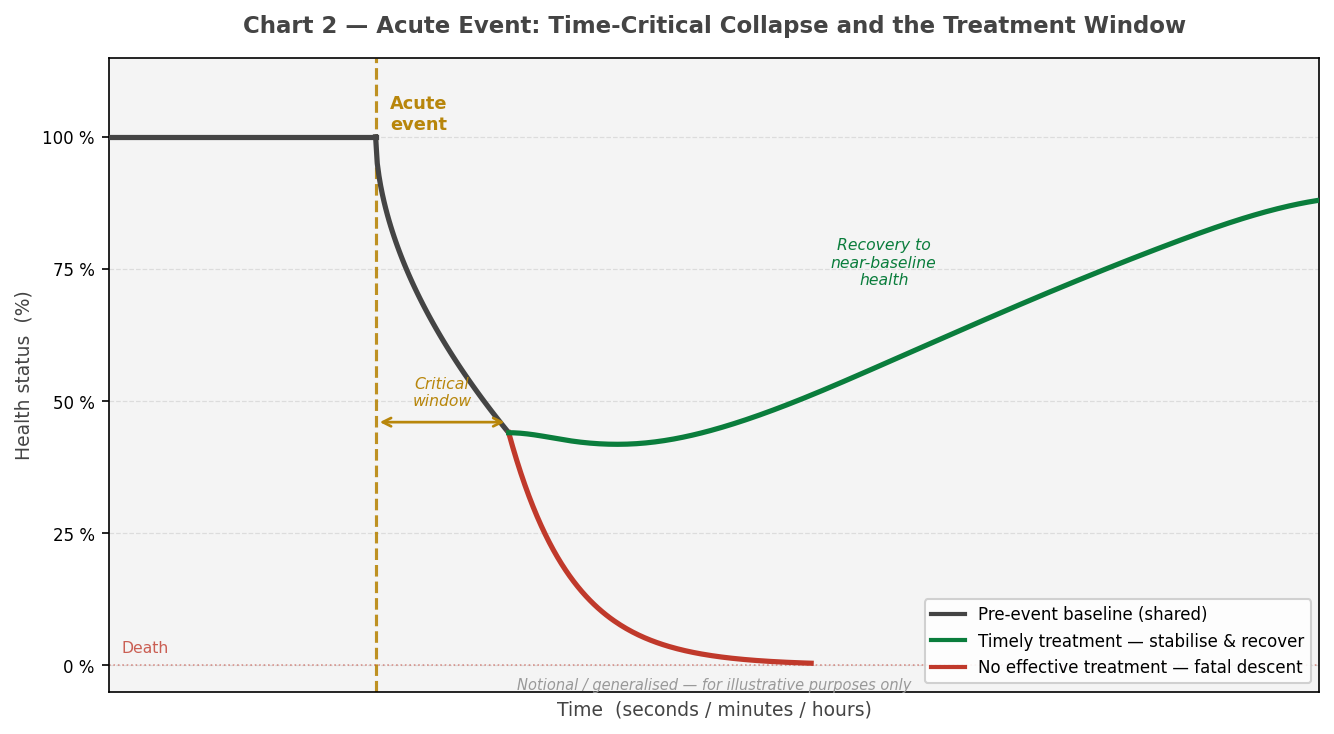
This job is what Emergency Medical Services (‘EMS’) are designed to do and should be doing. EMS deal with life and death emergencies. This was reported as a query of Stroke, but is it? Many conditions mimic Stroke. If this is a Stroke, it is an emergency. Preserving critical life-functions is paramount and time is precious. This job shows the thinking, processes and steps that Paramedics take to try and save life. Much of the time, we are successful. Sadly, sometimes we fail.
My normal paramedic partner was on his Advanced Paramedic Prescribing course so, I was allocated a student, fresh from the Academy in his first weeks of on-the-job training. It was a beautiful sunny morning, and a big football match day. We were to the West of the City Centre when this job popped up on the screen, Query STROKE. I glanced at the locus, in Glasgow’s East End.
“OK, we have a Stroke apparently! It’s in the East End, near the stadium. Let’s motor to this: full lights and klaxons; and we’ll try to stay to the West of the Crowds.” That was easier said than done as 60,000 fans were still making their way to the stadium.
My student acknowledged and immediately put on the blue lights and tones. We hammered it along the Broomielaw beside the River Clyde until we got to queuing traffic. I said “Use that bus lane on the other side and get past this lot.”
The student went over onto the other side of the road into the segregated and rarely used bus lane. Traffic had stagnated. We purposely stayed wrong side, going head-on into oncoming traffic. Sirens were switched from wail to yelp. My student drove well, assertive, fast but controlled. We quickly covered the 2 miles along the river.
The navigation system wanted us to go left into the City. Half an hour before the football, the plotted track would be packed with fans gulping down their last beers before heading to the match. Even Blue-light ambulances aren’t intended for high speed slaloms through masses of drunk football fans. I knew this part of town like the back of my hand … “Ignore that! Just go straight on … Now Right. OK, Next Left. Good, now all the way along.”
We emerged at the Glasgow Barras, an old stall-based market. The Navigation system now adapted to my plan. “Yeah, just follow it from here!”
We now had to carefully bullhead and weave our way in and out of queued traffic and battalions of fans. En route, I gave my student my thinking … “So, STROKE – if it’s for real, we are in, BEFAST, rapidly assess and full set of Observations. We aim to be in, out and on our way to hospital inside 20 minutes!”
We got to the scene. As we got out … “OK – we take everything, Bag, Defib, O2”.
Arguably, we should also have taken the suction but the vehicle was only 20 metres away. We went straight in. Lovely flat, really good condition, tidy – that’s a good sign in terms of lifestyle and good health habits.
We entered the living room. The polished wooden floor had a lake of vomit in the middle.
I asked “Where is the patient?”
His partner pointed “He was feeling terrible and had to go and lie down.”
Hearing us come in, the patient had already got up and entered the room. My instant impression seeing him was – Ominous! This did not look right, or good. His wife was frantic. It was clear that something was seriously wrong, but her husband was still breathing, walking and talking. I gave a quick explanation to them of what we were going to do.
Empathy is vital in this time-critical situation. We’re dealing with the patient who was in pain and extremely distressed. He was the focus of our interventions, but both are the focus of our care. It is important to factor a partner’s love and their shared fears. Medics need to recognise aspirations but manage the patient and relative’s expectations.
You need to be calm. However, you’ve got to inject urgency. Stroke can be a killer. Perhaps equally bad, Stroke may be a life-changing event that debilitates a previously healthy person, leaving them dependent and trapped inside a part-paralysed body or robbed of their abilities to talk and interact.
So, while you must be kind, be rapid and totally methodical. One of the team does the observations. The other tries to figure out what the extent of the Stroke is. We use the mnemonic:
BEFAST is a life saver. Pre-hospital, it’s enough to identify a Stroke. If anything is not right with any of these, there is solid reason to suspect Stroke. The public should call 999. It was a certainty here that BEFAST would confirm this to be an ongoing Stroke. A terrible headache coincided with projectile vomiting. Such energetic, violent vomiting can occur for other reasons, such as severe food poisoning or an obstruction, etc., or GORD, which is mega acid reflux. In the USA, GORD = GERD as Americans don’t like O as in (O)esophageal!
What had immediately riveted my attention on this job were that unbearably bad, sudden headache and violent vomiting. I quickly performed the test. For our patient, BEFASTv was:
Balance – It looked fine / OK(ish).
Eyes – I looked at his pupils with my pen: “How is your vision?”
He replied “It feels off!”
He was absolutely right. His right eye wasn’t tracking normally and the eye lid was limp and low (Ptosis). I quickly did a few more checks:
“Ok, can you focus? How many fingers? Track my pen, What colour is this?” … then eye-tracking extreme left/right, check for double vision, etc.
Face – right mouth droop and he couldn’t frown
Arms – Tingling in right arm & leg – but less so
Speech – slurred!
Terrible headache – and coincident violent Vomiting, (TV)
He said “I’ve got a really bad headache”
“Worst headache you’ve ever had?”
That confused him somewhat “Ehm … I’m not sure”
“OK, did it come on slowly or suddenly?”
His partner interjected “Suddenly! He was fine earlier on – he said the pain was awful” – so, worst ever!
Vomiting – of the projectile variety, no blood: Even before I saw the patient, this was obvious from the lake in the middle of the room. You wouldn’t have been faulted for donning a life jacket. Together, the T&V were very worrying, especially in a normally pristine house.
Onset time is critical in a Stroke as time is Brain.
“When did all this happen?”
“When I called the ambulance – about half an hour ago.”
So, known onset time about 10:55. I thanked her … “A good call! I’m very glad you did. This has multiple hallmarks of a stroke”.
You cannot and must not give falsely rosy expectations. These may soon be cruelly dashed. You convey the risks and absolute urgency and perhaps give limited positives such as we will be doing everything possible en route. Inside, I was thinking. What can we do? Is this guy going to die?
Nothing against working with students — we all have to learn — or, similarly, with folks we don’t know well. My student did very well here, but the familiarity and security of working with your regular partner is immense and the efficiency and quality of care is at its best. We both know what the other needs and mostly what they’re thinking and expecting. Any drugs are prepared to be ready when they’re almost certain to be asked for. As a crew, we don’t always agree but that is a perfect team. Open minds and two independent views on a subject are more likely to find a problem than a big ego with a single pair of blinkered eyes.
Steve and I had routinely discussed in the past what we would do with a really critical Stroke. Normally, we would go to the nearest A&E. This job was different. It was really bothering me. Despite my appalling sixth sense, the logical indicators were strong. I had a bad feeling that the chap might not make it. For now though, he was functioning reasonably normally. This was a life or death decision.
A big match day normally generates an excess of traffic and excess of alcohol where the latter turns into an excess of violence and excess of patients at the nearest A&E. One hospital, GRI covers the East End team and the other, QEUH covers “the Govan Team”, no Glaswegian pun intended. Today was GRI’s busy day. One consideration was how to avoid the traffic and deconflict wayward pedestrians. My core thought was What’s the best receiving-hospital for this?
I was primarily deciding whether to take him to Glasgow Royal Infirmary or to the neurology Centre at QEUH. 85% of Strokes are clots and 15% are bleeds from burst vessels in the brain. All things being equal, it’s a 17:3 probability to be a clot over a bleed.
Main (A&E) Hospitals have particular clinical specialties behind the wonderful A&E Departments. The more distant QEUH had the Neurology and Stroke centre on site. On the one hand, I was taking a very large but calculated risk if I bypassed the excellent and nearest Hospital with a great ED team who could stabilise, scan his brain and arguably clot-bust him if it was a clot? I thought What if I bypass GRI and our guy dies on the way?
On the other hand, it seemed like an extensive Stroke. That sudden Thunderclap headache and the explosive vomiting made me think Surely this has got to be a BLEED? If so, a decision not to go to the Stroke hospital could potentially kill him too.
The critical factor was that a wrong decision may be instrumental in or pivotal to his death. I was driven by the belief that it was a bleed, in which case, not taking him to the Stroke hospital had a much higher chance of a fatal outcome. The reason for this is that the greater the delay in treatment; then potentially the greater the bleed; and so the higher the risk of major brain damage or death.
I decided QE. So, tell the wife as it is – that there is something seriously wrong. “He is definitely having a Stroke. I think it’s a bleed. So, I am not going to the Royal. We’re going straight to QE as it specialises in Neurology. We need to go. And we need to go now. So, just grab your purse and your phone … and we’ll head!”
Normally, I’m very relaxed and pedantic. I have been frequently and fairly criticised for my being verbose, too chatty and too slow where there is no pressing emergency. The patient may be sick but is not critical. I like to take time to reassure the patient and relatives before we head off to hospital.
This was entirely different. I was looking at a patient who was a ticking time bomb.
All this may seem a little abstract, scientific, clinical, controlled or even minor. You may wonder What is the drama here? The drama is that Strokes can kill better than bullets. I was thinking: If I’m not mistaken, this poor guy could potentially die at any moment.
A person with a brain bleed is not obviously bleeding but they are imploding from within. There is excruciating pain as our most sensitive nerves are being compressed but an outsider can’t see this. A potentially fatal, hidden force is crushing the life out of our most sensitive and wonderful control centre, turning our brain into a congealing pulp. Think of the pain of childbirth or your dentist accidentally drilling into an unanaesthetised nerve root and you start to get the picture. This pain comes not from a group of insulted distant nerves but is concentrated on our pain-detection central processor.
A brain bleed is potentially catastrophic, like having your head squeezed in a vice. Your normally protective skull acts as a sealed container. Your brain feels like it’s inside a boiling pressure cooker. Our senses of sight, hearing, feeling and all else depend on our intact brain. The building pressure may destroy our vision, other key functions, or our life.
Standby callI called the Standby line to GRI to tell them that I thought we had a haemorrhagic stroke and intended to bypass them and go direct to the QE. I did so only to be sure I wasn’t breaking any protocol. The GRI Consultant said “Sure, that’s your clinical decision”.
That suited me “OK, that’s great - many thanks”
“Just set off slowly” … I tapped the code for QEUH Resus into my radio and pressed the call button …
The hospital picked up straight away “Queen Elizabeth”
I started my alert message:
Radio handover“West 5670, warning-in a Hyperacute stroke; BEFAST positive: bypassing GRI coming direct to you with believed possible haemorrhagic cause, Projectile vomit coincident with sudden, severe / worst ever headache and acute confusion, DOB etc.
BEFAST positive for:
Eyes: Right Eye cannot focus, does not track, drooping lid and patient reports tingling and degraded vision
Face: Right mouth droop, no frown
Arm: Right sided hemiparesis as right arm numbness
Speech: Slurred
Thunderclap headache and projectile vomit
Pulse 72 BP 139 / 89, SATS 97%,
Temperature 35.9, Resps 15, BM 5.2 GCS 14 Confused
ECG sinus, irregular, occasional bradycardia
Known Onset 10:55
ETA 12 minutes”
“OK, see you in Resus”
I closed the call with a brief “Thanks!”
I said to the guy’s wife “OK, we can do nothing for a Stroke on the way other than monitor. He needs a CT Scan. Without that, it is impossible to know if it’s a clot or a bleed.”
Half an hour before, we would have avoided the M8 motorway like the plague because of the football traffic. Now, it would be clearing and we were heading away from traffic. Even still, if significant congestion is likely, it’s sometimes faster to take roads with more options.
I shouted to my student through the hatch “Let’s miss on the M8 and go the expressway instead. Just keep it nice and steady” (meaning fast but not suicidal!). We were on scene for only 11 of our target 20 minutes – a career record for me. I was in minimalist mode.
What is more important, the data or the paperwork? Real-time data is transient. Unless you gather it there and then, it has been and is gone before its significance is known. If you’re not looking at a life-critical patient and ideally talking with them, you are not seeing their changes in real time.
I took a Blood pressure every 10 minutes and an ECG immediately thereafter. My concern was any significant change in his circulation or breathing.
The chap was capable of chatting away. I asked him:
“how good is your arithmetic?”
“Pretty good!”
“OK, what’s 37 plus 26?” “63”
“What is 7 times 9?” “63”
“Perfect – I’m just checking on your processing”.
That was true but I was also keeping him engaged. Keeping him mentally occupied will keep his mind away from any panic about how critically ill he might be.
Each ECG, Pulse or oxygen level or blood pressure check that was normal(ish!), I told him a numerical value and that it was good and in normal range. In fact, his pulse was slowing but the change was subliminally subtle as it was up and down within a range of +/- 5 each time from my last snapshot observations. I actually missed the dip to 50 as the variability and irregularity blurred the issue.
I had decided to bypass GRI and called in the Query haemorrhagic CVA standby message to QEUH and was expecting to be met by the Stroke Team. This was a risky decision. I based it on a feeling rather than a certainty of fact. If I had been with my normal crew-mate, we would have made the decision jointly. This was a solo decision with a major complication – what if the guy dies before you get him to hospital?
Statistically, the odds of a Stroke being an obstructing clot or embolism are significantly higher than a bleed. So, it wasn’t the smart gambler’s choice. Though rarer, bleeds have worse outcomes with a 30-day mortality of about 40% [3].
My colleagues often laughed at me for my multiple white boards stuffed down inside my shirt. I used these as my scribble pads with my multicoloured Sharpies, plus my iPad for my personal, homemade emergency-checklists. I looked like some deranged scientist, but even mad science sometimes has a purpose. This worked for me. I always had an easy way of noting critical events, times and changes. Partly, it’s an Aviation habit but more likely an embedded Asperger quirk of mine.
On critical jobs, I always made my notes on my scribble pads rather than trying to fight the ePRF electronic Patient-Report-Form touchscreen data-entry system. I found it awful and it frequently exhausted my patience.
For a normal stroke, an excellent Stroke Registrar gave Steve and me the optimal preparations before hospital as “18 gauge cannula in the Right ACF; take Pulse and Blood pressure every 10 to 15 minutes”. Our putting in the large bore Green cannula is one less thing for the Hospital to do in getting indicator dye into the person’s system. Pulse and BP trends are classic indicators of increasing pressure on the brain within the bone-dome.
I carried on making frequent pulse, breathing and oxygen level checks plus 10 minute interval Blood pressures and ECGs. You get your patient information in two forms, by looking at them; and via the trends of the physical observations.
With trauma and seriously ill folks, heart rate, breathing, blood pressure and oxygen levels are supreme along with keeping the patient as alert and responsive as possible. I continued throughout the trip head-up looking at the patient rather than head down staring at the keyboard.
The first [permanent-observation] method provides you with maximum data and understanding of the patient’s stability and trends but leaves you the delayed admin of typing-in the data after you’ve handed over the patient.
The second [concurrent data-entry] method is an excellent way of having impeccable, detailed paperwork to explain precisely why you have delivered a dead person to the hospital. Cynical though I have become, I still prefer method 1 over 2. I was thinking “Is there any treatment I could give to improve matters?” The patient was alert, sitting head-up, body elevated at the recommended 30-40° from horizontal.
My mega concern remained the wholesale projectile vomit accompanying the sudden, severe headache and initial gross confusion. For once, my initial assessment had been immediate and intuitive. On the way, I attempted to test various other indicators. I retested his colour and visual perception, his logic and did a quick smell and hearing check. His brain processing was outstanding, despite his present deficits.
I kept an eye through the tinted glass to keep a handle on our progress, the traffic and how far we were from hospital and I made light conversation on passing Glasgow landmarks.

As we sped along the expressway, I took screen-grabs of the ECG pattern. The ECGs were abnormal and irregular on the timing front, mostly 75-80 but occasionally dipping towards the 50 mark. He had a young heart and had a job and lifestyle that kept him fit. So, few concerns that his heart would continue doing its vital work. I took ECG 4. My interest was the basic pattern of rate and rhythm.
ECG 4 was the same as the prior patterns, irregular but not that alarming. The time gap between the peaks although variable, was in a good range of about 3 to 5 large grid squares. So, he was ill, but not critical.
“We’re about 3 minutes out from hospital.” I was happily talking away and just about to take a final set of observations. It was one of those Nearly there and we’re safe then Oh no, it was all going so well moments!
He slumped. His head flopped forward. I glanced at the ECG. His pulse plummeted.
70-75 down to 32, it flickered perilously. I tried to rouse him. “Can you hear me?” Nothing, no response.
Violent patients don’t spook me much, but dying ones certainly do. Right now, I was instantly, gravely worried. I pressed the ECG snapshot button. It started to print.
My next thought was – Shock pads! While reaching for them, I watched the ECG screen grab start to print. My one hand was feeling for the pads. I pressed the Take-BP sample button with the other.
I glanced at the ECG as I ripped it off the printer. ECG 5 confirmed my worst fears. There was bad news on the horizon, It was potentially the very worst of immediately bad news.
ECG 5 had major and significant rate-changes: Bradycardia – a dangerously low heart rate that fell to 32 at worst. Doing 30 in towns might be a good speed for a car, but hearts just don’t work at that rate.
His pulse crept up to 50 then back down to 38-42. He opened his eyes.
“Are you OK? Can you hear me?”
“Yeah, I just felt a bit strange”.
The blood pressure returned 175 systolic. This was a dramatic rise on all that went before. It came out of nowhere without a hint of a change. I took a last ECG, 6¾ = about 44 heartbeats per minute.

My thinking had changed from relaxed chat to: If he doesn’t stabilise, he is going to arrest (die).
What can I do? …
References
- Aroor S, Singh R, Goldstein LB. BE-FAST (Balance, Eyes, Face, Arm, Speech, Time): Reducing the Proportion of Strokes Missed Using the FAST Mnemonic. Stroke. 2017;48(2):479–481. doi:10.1161/STROKEAHA.116.015169
- Harbison J, Hossain O, Jenkinson D, Davis J, Louw SJ, Ford GA. Diagnostic Accuracy of Stroke Referrals From Primary Care, Emergency Room Physicians, and Ambulance Staff Using the Face Arm Speech Test. Stroke. 2003;34(1):71–76. doi:10.1161/01.STR.0000044170.46643.5E
- van Asch CJ, Luitse MJ, Rinkel GJ, van der Tweel I, Algra A, Klijn CJ. Incidence, case fatality, and functional outcome of intracerebral haemorrhage over time, according to age, sex, and ethnic origin: a systematic review and meta-analysis. Lancet Neurol. 2010;9(2):167–176. doi:10.1016/S1474-4422(09)70340-0
Certain details have been redacted or generalised to meet patient-confidentiality requirements. The accounts are drawn from real events, but no identification of any individual patient should be inferred from the details presented, whether singly or in combination.